If you have a puppy, I don’t need to tell you why many dog trainers call them Land Sharks affectionately! These cute little bundles with needle sharp teeth they love to sink into our soft skin! Training a puppy is no small feat, but with patience, consistency, and the right approach, it can be a rewarding experience for both you and your new four-legged friend.
In this guide, we’ll delve into the essentials of puppy training. Whether it’s housebreaking, sleeping routine, potty training, or socialisation, we’ve got you covered. You’ll learn not just the ‘how’ but also the ‘why’ behind each training technique, ensuring you and your pup can build a strong, loving relationship based on mutual respect and understanding. So grab your treats, a leash, and your pup’s attention—it’s time to begin this exciting adventure in puppy training!
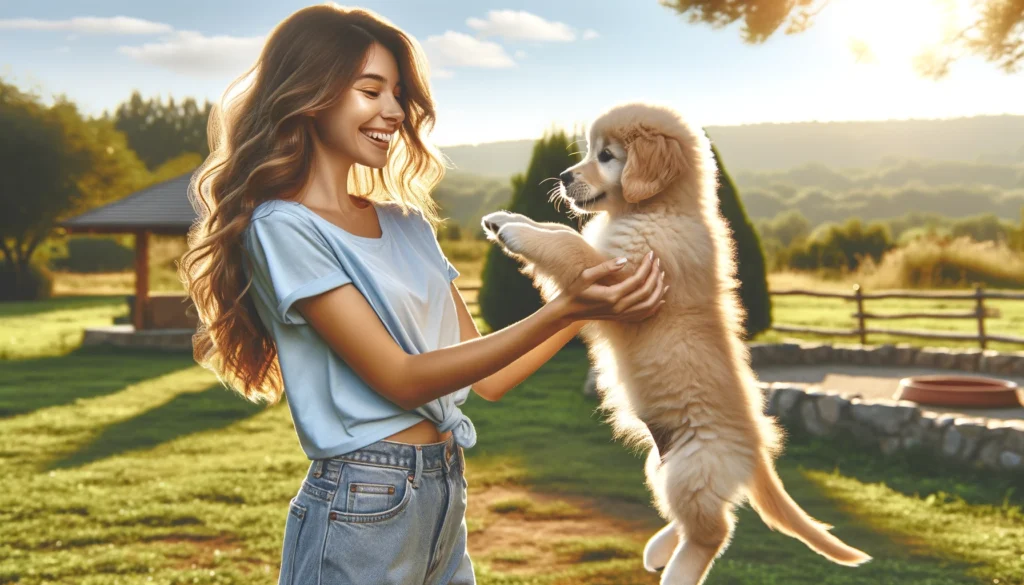
As a new puppy owner, I would say your main focus should be on management! Management of the environment your puppy has access to, management of their toileting behaviour and providing the puppy with ‘errorless learning’. What on earth does that mean, I hear you cry!
When we take a puppy into our homes, we must manage their access correctly. In other words, we should in effect prevent the puppy from getting it wrong (errorless learning). For instance, no shoes lying in the hallway that the puppy has free access to. It should not be possible for the puppy to produce a puddle on the living room rug if he was not allowed access unattended. No one is perfect but with good management, you can get a lot done in a short time!
To help a puppy succeed we need to remove all the temptation that could lead them down the wrong path and ensure that there are no ‘illegal chews’ within their reach for them to get it wrong. If your puppy does get hold of something they shouldn’t, you need to tell yourself off, not the puppy.
As humans we often make the mistake of assuming things, we assume the puppy knows that he is supposed to toilet outside! It makes perfect sense to us but not to the puppy. Leaving the door open doesn’t communicate that going to the toilet in the garden is what is required, in order for the puppy to learn that, we need to be there to reinforce them when they get it right.
Human beings are not great at offering reinforcement for behaviour that we like; we tend to focus on the behaviour we Do Not like! Ask any husband if his wife points out how delighted she is with him for managing to put his laundry in to the laundry basket, I bet the answer is no. But if he misses, he hears all about it!
Our puppies learn what we want from them by reinforcement, we don’t need to use punishment, it doesn’t work, and the puppy doesn’t actually learn from it. If you hear yourself saying ‘he knows not to do that’, stop and think about the actual possibility that a puppy has outsmarted you and decided to defy you and deliberately do something wrong, sounds silly? It is! If your puppy is doing something you don’t like, what do you want them to do instead?
It is not possible to train a dog to NOT do something. Think of the things you would like to change in your puppies behaviour, do most of them start with ‘I want him to stop’ or ‘I don’t want him to’? OK, so what do you want him to do instead? Don’t want him to jump up? What can he do instead to let you know he wants you? Would a nice polite sit work for you? That’s the right approach to training your puppy.
Let’s talk about teething and what you can offer your puppy, so they are not biting you. Much like human babies they explore the world by putting things into their mouth. Puppies need to bite things as they don’t have hands they play with their mouth on toys. They need lots of different textures to help them through the painful teething process and just like human babies, they often seek out cold items to ease that pain.
There are hundreds of different products out there for your puppy, and it can get quite confusing and expensive. There are lots of things you can do to help your puppy. You can use an old tea towel lightly wrung out, spread with treats and frozen makes a great chew. Kongs are also fantastic as they can be filled with all sorts and frozen, including their dinner which is a much more beneficial way to feed your puppy and help them get through this painful phase!
Socialisation, what does that mean? It isn’t all about meeting other dogs, if only it was that easy! It is an umbrella term used for our dogs to learn about the world while they are young and adaptable. It is all about the sights, sounds, textures, smells and tastes! All of these things are so important for your puppy to grow up as a well-adjusted and balanced adult.
They need to meet different people; men, women, children, teenagers, men with hats, glasses, beards, people with walking sticks, wheelchairs, etc. The more diverse people they meet, the better! If the puppy is unsure, we let them stand and watch, then we reward their calm behaviour and encourage them to approach in their own time. Resist the urge to pull them towards things they are unsure of, be their support buddy, gently encourage with a nice loose lead, you will be surprised how quickly they will approach on their own given the chance.
Bedtime routines can also be a problem for new puppies. Try and imagine how scary it must be for these little guys, they are playing with their siblings and safe with mum. Someone fun comes to visit, and they end up going home with them to a strange smelling home with maybe a lot of different people they have never met before. Now, imagine how scary that must be to be shut in a room on their own for the first night left to cry themselves to sleep eventually. You don’t need to do that to your puppy.
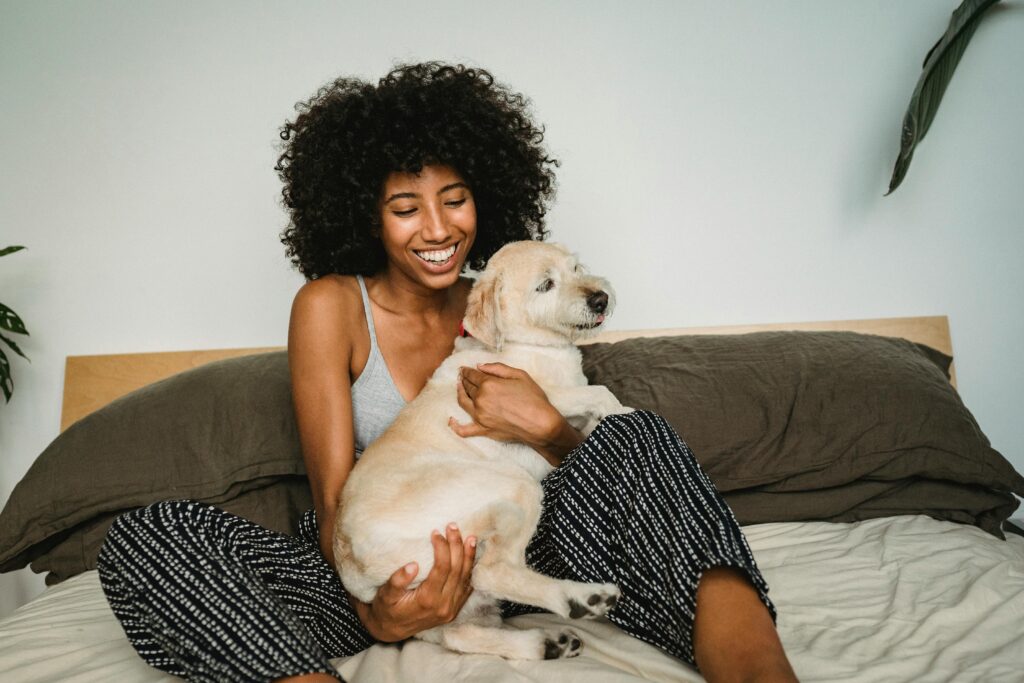
Wherever you want your puppy to sleep eventually, you can move towards that. Offering them the support of you being nearby, either by having a crate or bed by your bed so they can alert you to the fact they need a wee or just to say, ‘it’s OK, I am here’. Or, you can sleep downstairs with them to reassure and comfort them and let them know they are safe, and they can get access to the toilet if and when needed.
Our puppies’ bladders are tiny, they should never be expected to go all night without a pee break, we don’t expect human babies to and puppies are no different. Expecting a puppy to sleep in an environment they had no choice but to toilet in is wrong. Our puppies don’t want to toilet in their bed, but if no one will come and let them out during the night, they have no choice.
The bedtime for puppies can vary depending on their age, breed, and individual energy levels, but generally, it’s a good idea to establish a regular bedtime routine to help them settle down for the night. Typically, puppies do well with a bedtime around 8-10 PM. This allows them to sync with the household’s routine and ensures they get enough rest, as puppies need a lot of sleep—usually around 18-20 hours per day in their early months.
Here are some tips to help establish a good bedtime routine for your puppy:
One of the most important aspects of owning a dog is the relationship you build with them; you can train in a fun and rewarding way for both of you where your dog trusts and adores you. You have a few sleepless nights to start off and get them feeling safe and secure and getting the toileting started right so we have less mistakes. Or, you can use harsh aversive methods, so your dog fears you and they have accidents in their bedding which makes everyone feel unhappy. I know which one I want.
Remember that the tiny puppy you bring into your house trusts you completely and is relying on you to take care of them and show them the way of the world! We all make mistakes, especially when we don’t know what the best course of action is. If you have a new puppy in Northern Ireland and you are struggling, seek the advice of a professional, just like you would for plumbing. Training your puppy is like learning how to play the piano. If you bought a piano, you would have lessons to learn not just muddle through.
There are lots of great trainers in Northern Ireland, find a positive reinforcement trainer to help you get your puppy’s journey started right! Here at the Daisy Dog Academy, we want learning and fun to always go hand in paw! If you are not having fun, then you can be certain your puppy isn’t!
Be your puppy’s champion, be consistent and seek help when in doubt. If you need advice, get in touch with our team for free today!